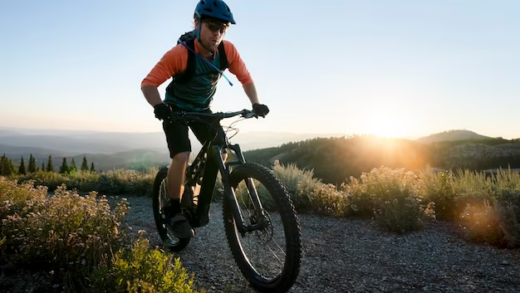
Jordan has quietly become one of the world’s most exciting destinations for people who love to travel under their own power. The Jordan Bike Trail runs roughly 730 kilometres down the spine of the country, from the northern hills all the way to the Red Sea, threading past ancient ruins and through the Mars-red desert of Wadi Rum. It is the kind of epic that belongs on any serious rider’s list.
But even the most saddle-obsessed cyclist knows the best of a place is sometimes found off the bike, and Jordan’s crown jewel proves it. Petra, the 2,000-year-old city the Nabataeans carved straight into rose-coloured cliffs and lost to the outside world until 1812, is explored entirely on foot, and it is worth every single step. If you are the sort who plans bikepacking adventures around the world’s great landscapes, this is the walking chapter you do not skip.
Petra is vast and genuinely physical, a full day of walking and climbing that surprises most first-timers. So how you experience it comes down to your energy and your time.
A few things make the day go well. A licensed guide brings the Nabataean history and their astonishing water engineering to life. Sorting your tickets in advance saves money and hassle. And good shoes matter, because you will cover a lot of uneven ground. Here are the best ways to experience it, ranked as a route from the entrance into the heart of the site.
1. Compare and Book It All in One Place
Petra has day trips, multi-day tickets, night visits, guided tours, and combinations with Wadi Rum and the Dead Sea, through a wide range of operators. Sorting that from home, along with the Jordan Pass and transport, is a real task. Petra Jordan Tours is a platform built around this destination, so instead of guessing you get the options laid out clearly by length, guide, and what each includes.
The value is that it matches the visit to your fitness and time, and handles the fiddly parts, from securing a licensed guide to advising on the money-saving Jordan Pass and pairing Petra with Wadi Rum. You can weigh a one-day highlights run against a fuller two-day exploration, and book a reputable operator.
You can compare Petra tours here and plan a well-paced visit before you go, which matters given how much ground Petra covers.
Best for anyone who wants a sorted, well-guided trip without the logistics headache. If you already know your plan, book directly.
2. The Grand Entrance: The Siq and the Treasury
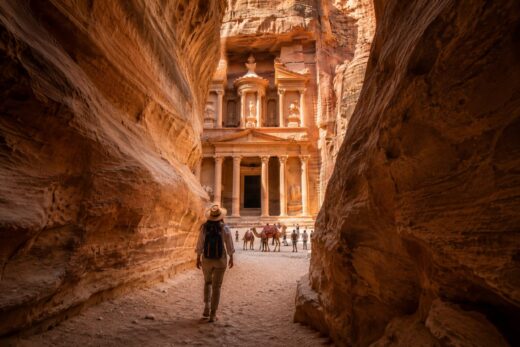
This is the reveal that made Petra famous. You begin with a roughly 1.2-kilometre walk through the Siq, a towering, sinuous gorge whose sheer walls close in to a narrow slot, building anticipation with every step. Then the rock parts, and there it is: Al-Khazneh, the Treasury, its intricate façade glowing in the gap. It is one of the great first impressions in all of travel.
Arrive for the 6am opening. The first two hours bring cool air, soft light in the Siq, and a chance to stand before the Treasury with only a handful of people around, which by mid-morning becomes a crowd.
The Siq itself is flat and easy, though long, so it is accessible to almost everyone as far as the Treasury.
Best for every visitor. This is the unmissable heart of Petra.
3. The Big Climb: The Monastery and the High Places
Here is where the fit are rewarded. A staircase of roughly 800 rock-cut steps, a 45 to 60 minute climb, leads up to Ad-Deir, the Monastery. It is Petra’s largest monument, 48 metres wide, and it is quieter and arguably even grander than the Treasury, with tea sellers along the path and an “end of the world” viewpoint beyond it, gazing out over Wadi Araba. The High Place of Sacrifice offers another sweeping panorama for the effort.
This is the kind of leg-burning ascent a cyclist will genuinely relish, and the reward at the top is worth every stair. Start before 8am to beat the heat and the donkey traffic on the narrow path, and allow three to four hours for the round trip.
The climb is demanding and there is little shade, so carry water and pace yourself.
Best for reasonably fit travelers who want to earn Petra’s grandest views.
4. After Dark: Petra by Night
For something completely different, come back after sunset. On Sunday through Thursday evenings, the Siq and the Treasury are lit by around 1,500 candles, with Bedouin music echoing off the ancient walls and a projection show illuminating the famous façade. Walking the darkened gorge by candlelight is atmospheric and genuinely magical.
It is more about mood than sightseeing, and it makes a memorable contrast to the daytime visit. Tickets are sold separately from the daytime entrance, so book ahead.
Manage expectations, since it is a slow, crowded, ambient experience rather than a chance to explore.
Best for travelers who want atmosphere and a different side of Petra.
5. Beyond Petra: Little Petra and Wadi Rum
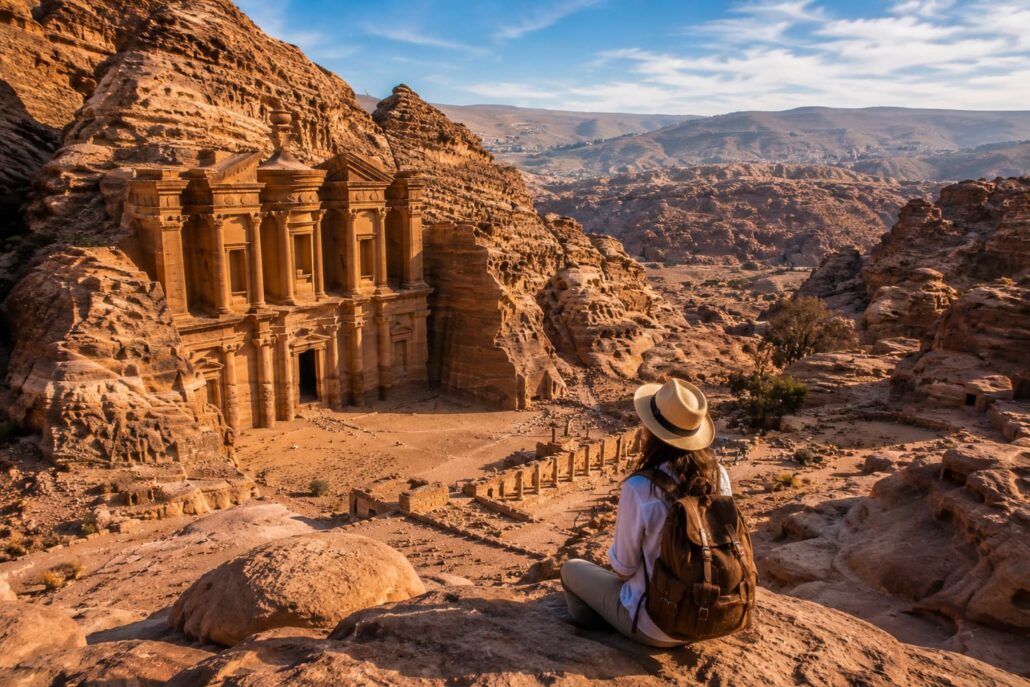
To round out the adventure, look just beyond the main site. Little Petra, or Siq al-Barid, is a quieter mini-Nabataean settlement nearby, a lovely low-key counterpoint. And then there is Wadi Rum, the vast, otherworldly red desert of Lawrence of Arabia and countless films, where you can take a jeep safari across the sand, sleep in a Bedouin camp under staggering stars, and, fittingly, cross paths with the Jordan Bike Trail itself.
Combining Petra with Wadi Rum is the classic southern-Jordan itinerary, and it delivers ancient history and raw desert wilderness in one trip.
It adds a day or two, so it suits travelers with time rather than those on a tight single-day schedule.
Best for adventurers who want the full sweep of southern Jordan.
A Few Practical Things Before You Go
Come ready for a big walking day. The full site, from the Siq to the Treasury to the Monastery and back, is eight kilometres or more with plenty of climbing, so wear proper shoes and carry water. Give Petra at least a full day, and ideally two, because a single day forces a choice between the Monastery and the other trails, while a two-day ticket removes that compromise.
Time it for spring, March to May, or fall, September to November, when the weather is mild. Summer is hot and crowded, and winter is quiet and cheap but cold, with occasional rain that can briefly close the Siq. Buy the Jordan Pass online before you arrive, since it bundles Petra entry with your tourist visa and dozens of other sites including Wadi Rum, saving real money if you stay two or more nights.
Arrive at the 6am opening for the best light and fewest crowds, and consider staying in Wadi Musa the night before for early access. Jordan is also increasingly on the map for adventure riding across the wider region, if you want to add some saddle time. For background, UNESCO’s page on Petra is worth a read, and the official Visit Jordan site helps with planning. Both pair well with any related travel guides already on the site.
Choosing the Right One for You
Petra rewards travelers who match the visit to their energy and their time.
Start by comparing your options through Petra Jordan Tours so you get a good guide and the right tickets. Here for the iconic reveal, walk the Siq to the Treasury. Fit and after the grandest views, climb to the Monastery and the high places. Craving atmosphere, come back for Petra by Night. Wanting the full adventure, add Little Petra and Wadi Rum.
However you do it, hang up the bike for a day or two when you reach Petra. Some wonders are meant to be walked, and this rose-red city, carved by hand into the desert cliffs two thousand years ago, is the greatest of them.
Author note: recommendations here reflect Petra’s access and prices as of 2026. Ticketing, hours, and Petra by Night schedules change, so confirm the current details before you go.